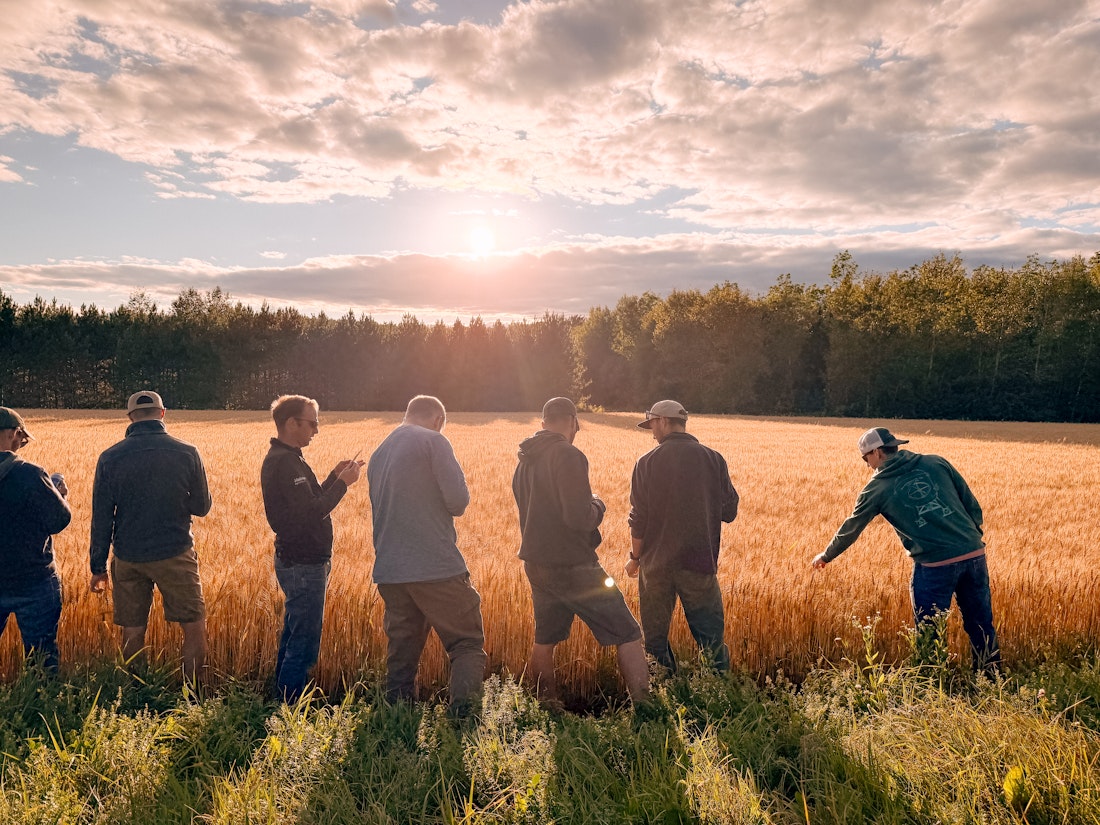
A Journey with Friends
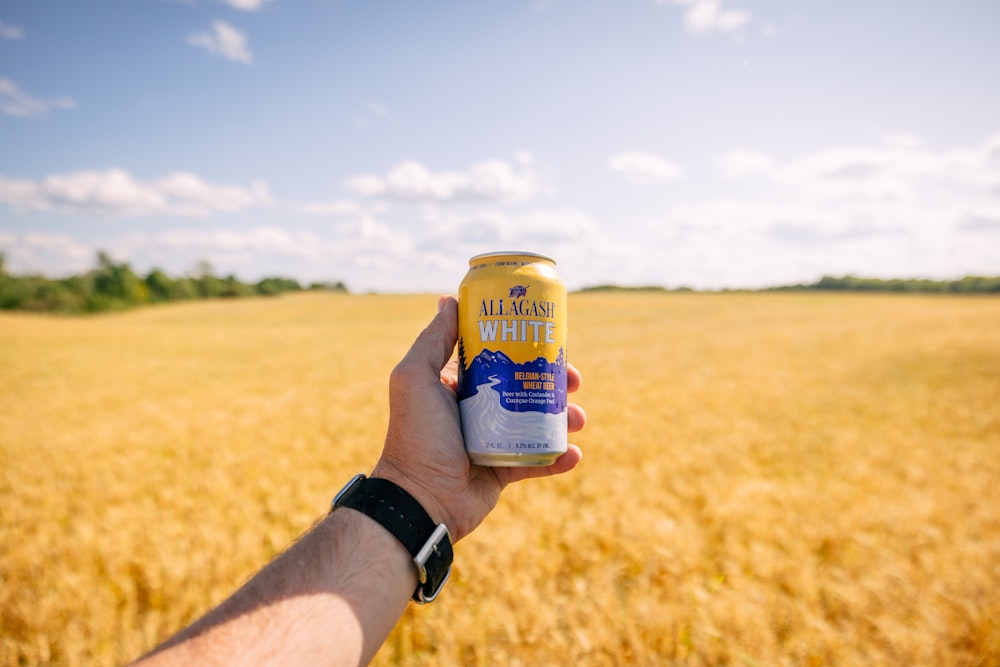
If you were to pick up and enjoy an Allagash White, a good portion of that enjoyment would come from Maine-grown grain. And the fact that that grain is in your glass is due to a pledge way back in 2015, and the many folks who worked hard, both inside our brewery and out, to make it happen.
In 2025, we crossed a milestone we’ve been working toward for nearly a decade: brewing with more than two million pounds of Maine-grown and Maine-processed grain in a single year.
If you’re more the audio type, you can simply listen to our brewmaster and senior technical brewer recount the whole thing in this podcast right here!
It Started with a Promise.
Our commitment to Maine-grown grain officially began in 2015, when we made a pledge to brew with one million pounds of Maine-grown grain by 2021. At the time, that felt ambitious—maybe even a little intimidating.
Here’s how that growth looked year by year:
- 2016: ~65,000 lbs
- 2017: ~140,000 lbs
- 2018: ~330,000 lbs
- 2019: ~650,000 lbs
- 2020: ~728,000 lbs (even during a year of major disruption)
- 2021: 1,090,000 lbs 🎉
Not only were we super gratified to reach our goal on time, we simply kept going. Here’s how the subsequent years shaped up:
- 2022: ~1,505,000 lbs
- 2023: ~1,895,000 lbs
- 2024: ~1,699,000 lbs
By 2025, that number had quietly grown to 2,025,674 lbs of Maine-grown, Maine-processed grain brewed right here in Portland.
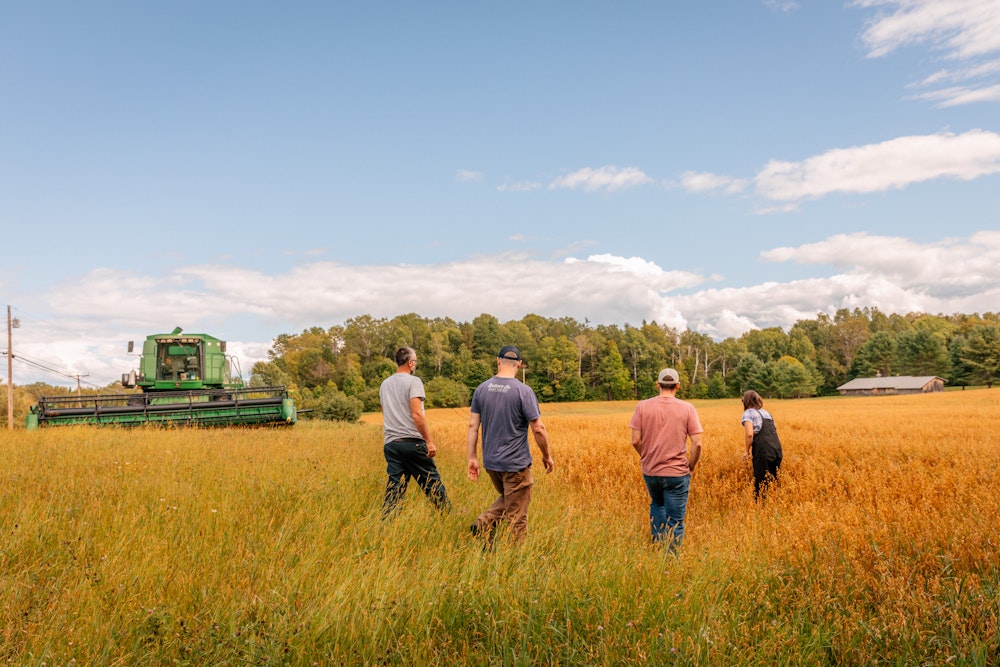
Why Maine Grain Matters
Using more local grain has opened up so many positive, and unexpected, benefits.
For Maine farmers, grain—especially barley—has long been part of crop rotation, even if it wasn’t historically destined for beer. But with conversations and collaboration, we’ve been able to work together with our farmer and maltster partners to create a robust grain economy here in Maine.
Some of the biggest benefits we’ve seen:
- Stronger relationships with the people growing our ingredients.
- More resilient supply chains, less affected by global disruptions
- Lower transportation impact, with grain traveling hundreds—not thousands—of miles
- Flavor consistency, even in beers as iconic as Allagash White
- A growing regional grain economy that now supports breweries beyond Maine
The Grain Behind the Glass
A huge part of making this work has been partnering with people who care deeply about grain—how it’s grown, how it’s malted, and how it shows up in beer.
Maine Malt House (Mapleton, ME)
- White wheat (now 100% Maine-grown for Allagash White)
- Oats
- Flaked Corn
- Base Malt Barley
Aurora Mills & Farm (Linneus, ME)
- Organic Oats
- Spelt
- Buckwheat
Blue Ox Malthouse (Lisbon Falls, ME)
- Pilsner malt
- Pale / base malts
- Small-batch specialty malts for pilot and one-off beers
These folks have become way more than suppliers for us. They’re both collaborators and, honestly, friends.
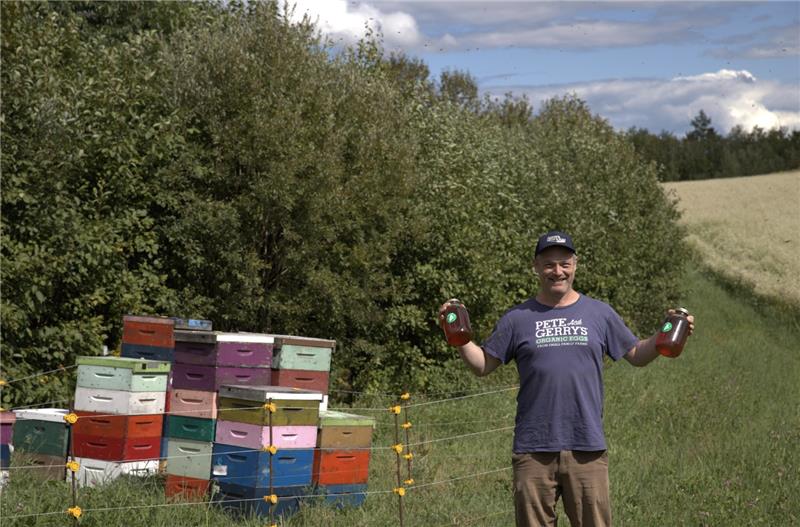
Branch, Allagash Brewer, proudly displaying honey in front of bees nests.
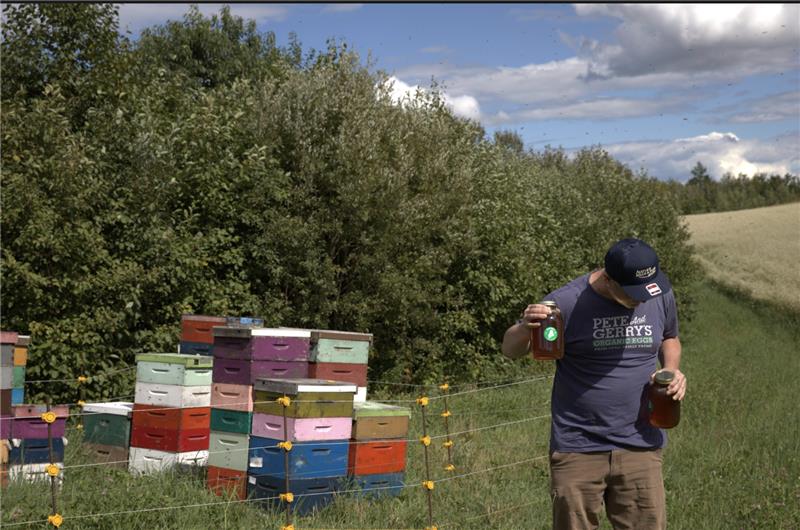
Branch, Allagash Brewer, proudly getting stung by bees that want their honey back.
Step by Step
One of the more significant challenges we faced over the course of this journey was, as we changed the raw ingredients for each beer, making sure it still tasted like, well, the same beer.
So we made sure to slowly, methodically, and with more than a little sensory evaluation, change the ingredients. For us, that meant:
- Starting small, often bag by bag
- Relying on a rigorous sensory program to detect even subtle changes
- Scaling only when flavor, performance, and consistency were dialed in
- Integrating local grain into everyday beers, not just special releases
Today, nearly every beer we brew includes Maine-grown grain in some way—especially our flagship, Allagash White, where Maine-grown raw white wheat is now a cornerstone ingredient.
Beyond Maine
One of the most exciting parts of this journey is that it doesn’t end with us.
The growth of Maine malt houses and farms has helped fuel:
- Other Maine and New England breweries
- Distillers across the region
- A broader national movement toward regional grain systems
We’ve even brewed collaboration beers using similar farm-to-malt-to-brewery models in other states—proof that what works here can inspire others elsewhere.
What’s Next?
More of the inspiring, gratifying, positive same.
Whic means:
- Continuing to grow grain usage alongside our farming partners
- Exploring new grain varieties and specialty malts
- Letting Maine grain inspire future pilot beers and collaborations
- Keeping the entire system—farm, malt house, brewery—strong and sustainable
Our plan is both simple and effective: to keep doing what we’ve been doing. Consistent, long-term effort tends to yield the best results.
Because at the end of the day, brewing with Maine-grown grain isn’t just about hitting a number. It’s about staying connected—to the land, to the people, and to the place that makes our beer what it is.
Thanks, as always, for reading!